






Location
Two institutions. One coherent story.
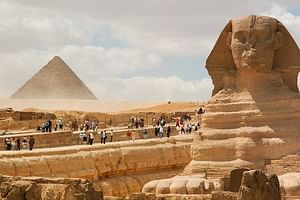
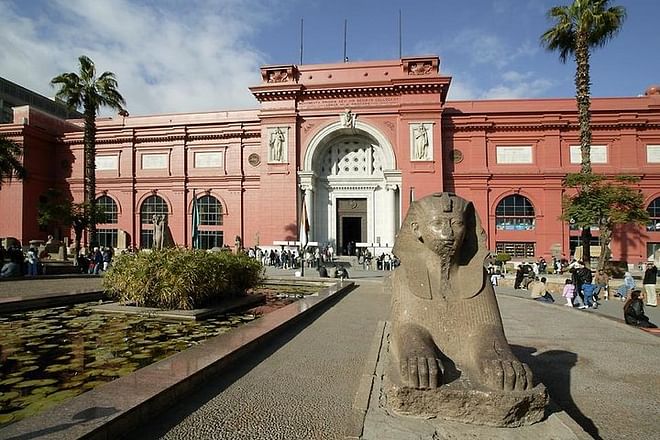
The Giza Plateau gives you the monuments — the three pyramids, the Sphinx, and the scale of Old Kingdom ambition. The Egyptian Museum at Tahrir Square gives you the objects — the artifacts, the mummies, the royal treasures that were placed inside tombs exactly like those you walked around at Giza that morning.
Together in one private, guided day, they form the clearest introduction to ancient Egypt available in Cairo.
Who This Tour Is For
- First-time visitors who want both the iconic monuments and the museum context
- Travelers interested in what was found inside the pyramids, not just the pyramids themselves
- Those who prefer the historic Tahrir Square museum to the new Grand Egyptian Museum
Note: If you want to see Tutankhamun's complete golden collection, the Grand Egyptian Museum tour is the better choice — that collection moved from Tahrir to the new museum. The Tahrir museum remains extraordinary for its breadth, including royal mummies and artifacts spanning all periods of Egyptian history.
How the Day Flows
Morning: Private pickup, drive to Giza. Arrive before the crowds. Your Egyptologist covers the plateau in the right sequence — Great Pyramid, panoramic viewpoint, Sphinx. Time to absorb, not just observe.
Midday: Lunch break. Drive to central Cairo.
Afternoon: Egyptian Museum at Tahrir Square. One of the oldest and most densely packed museums in the world, your guide focuses the visit on the highlights that connect directly to what you saw at Giza.
✦ The Egyptian Museum at Tahrir holds over 170,000 objects in a building designed for a fraction of that number. Without a guide, it is genuinely disorienting. With one, it becomes a focused journey through five thousand years of history in an afternoon.
Sites You Will Visit
- The Giza Pyramids — all three
- The Great Sphinx
- Plateau panoramic viewpoint
- Egyptian Museum, Tahrir Square
Common First-Time Questions
What is the difference between this tour and the Grand Egyptian Museum tour?
This tour visits the original Egyptian Museum at Tahrir Square, established in 1902. The Grand Egyptian Museum tour (at Giza) focuses specifically on Tutankhamun's complete collection and new permanent galleries. Both are extraordinary — the right choice depends on your interests. Ask us if you are unsure.
Will I be pressured to buy anything?
No. This is a private tour. We do not include commission-based stops and your guide will not redirect the itinerary for shopping.
Can the pacing or order be adjusted?
Yes. This is private — the schedule adapts to you. If you want to spend longer at one site or skip something, tell your guide.
Is this suitable for travelers arriving from a long flight?
We recommend scheduling your first full tour after at least one night of sleep in Egypt. If you are booking for the arrival day, we can discuss a gentler start time.
What's included?
- Food and drinks
- Private hotel pickup and drop-off in Cairo or Giza
- Private, air-conditioned vehicle throughout
- Licensed Egyptologist guide, full tour
- Entrance fees to all listed sites
- 30 minutes camel ride around the Giza pyramids (if option selected)
- Lunch at a good quality restaurant
- Bottled water
Exclusions
- Tip or gratuity
- Gratuities
Extra entrance fees (interior of the Pyramids) - Tips
- Remote pickup locations or airports require an extra charge
Please Note
Pickup & Timing: Your guide contacts you the evening before your tour via WhatsApp to reconfirm the exact pickup time and your hotel details. Pickup is from the lobby of any hotel in Cairo or Giza (Luxor or Aswan for southern tours). If you're staying in an Airbnb or non-hotel accommodation, share your location pin when booking so your driver can find you easily.
What You'll Pay On-Site: All entry fees listed in the itinerary are included. If you choose optional upgrades during the tour — such as entering the Tutankhamun tomb, the Seti I tomb, or the Great Pyramid interior — these are paid on-site by credit or debit card. Your guide will advise whether each upgrade is worthwhile before you decide. Cash is no longer accepted at most major archaeological sites in Egypt.
Weather & Sun Egypt is hot and dry for most of the year. From October to March, daytime temperatures in Cairo are comfortable (18–25°C / 65–77°F), but mornings can be cool. From April to September, expect 35–45°C (95–113°F) at open-air sites. The Giza Plateau, Valley of the Kings, and Karnak have almost no shade. Your guide schedules site visits to avoid the worst midday heat, but sun protection is essential regardless of season.
Dress Code: Dress comfortably and modestly. At mosques (Al-Hussein, Al-Azhar, Alabaster Mosque), shoulders and knees must be covered — this applies to all genders. At archaeological sites, there is no dress code, but lightweight long sleeves protect against the sun better than sunscreen alone. Comfortable closed-toe shoes with grip are essential — sites involve walking on sand, uneven stone, and rough terrain.
Photography: Photography is permitted at most outdoor archaeological sites. Inside tombs (Valley of the Kings), photography is generally prohibited unless you purchase a separate photography ticket. Inside the Grand Egyptian Museum, photography rules vary by gallery — your guide advises on the day. Drone photography at all archaeological sites requires permits that are extremely difficult to obtain. Do not fly a drone without confirmed authorization.
Payments & Currency Egypt's currency is the Egyptian Pound (EGP). Most tourist-facing businesses accept credit/debit cards and USD. Your guide and driver accept tips in EGP, USD, or EUR. ATMs are widely available in Cairo, Luxor, and Aswan. Recommended tipping: $5–10 per person for your guide on a half-day tour, $10–15 on a full day. $3–5 for your driver.
Health & Safety: Drink only bottled water (provided on your tour). Tap water in Egypt is not safe for tourists. Carry any personal medications you need — pharmacies are available but may not stock specific brands. Apply sunscreen before departure, not on-site — you'll be in the sun within minutes of arriving at most sites. Travel insurance is required for all tours and is not provided by Pyramids Land.
Cultural Notes: Egyptians are genuinely welcoming. "Shukran" (thank you) and "Salaam alaikum" (peace be upon you) go a long way. At tourist sites, you may be approached by local vendors or people offering unsolicited help (leading you to a viewpoint, taking your photo). A polite "la, shukran" (no, thank you) works. Your guide manages these interactions so you don't have to.
What do I need to bring?
- Comfortable closed-toe shoes with grip (sand, uneven stone, rough terrain at all sites)
- Hat with a brim — essential at Giza, Saqqara, Valley of the Kings, Karnak, and all open-air sites
- Sunscreen (apply before departure — you'll be in the sun immediately on arrival)
- Sunglasses
- Camera or smartphone (charged — there are no charging points at sites)
- A light scarf or shawl for mosque visits (shoulders and knees covered)
- Small daypack for water, camera, and sun protection
- Any personal medications you need during the day
We provide bottled water throughout the tour. You do not need to bring your own.
Meeting Points
Cancellation Policy
Please contact WorldGift for more information.





Validate your login
Sign In
Create New Account